

Have you ever had a brilliant business idea pop into your head while washing the dishes or trying to fall asleep, only to wonder if it’s actually worth pursuing? You are definitely not alone. Figuring out how to test a business idea with no money is the single most important skill a new entrepreneur can learn before spending a single dollar on logos, inventory, or website hosting.
Most beginners make the expensive mistake of building a product or service first and hoping people will buy it. In the real world, 90% of startups fail because they build something nobody actually wants. The good news? You can completely avoid this trap. Validation allows you to test market demand using zero financial capital, relying purely on your time, curiosity, and a few smart strategies.
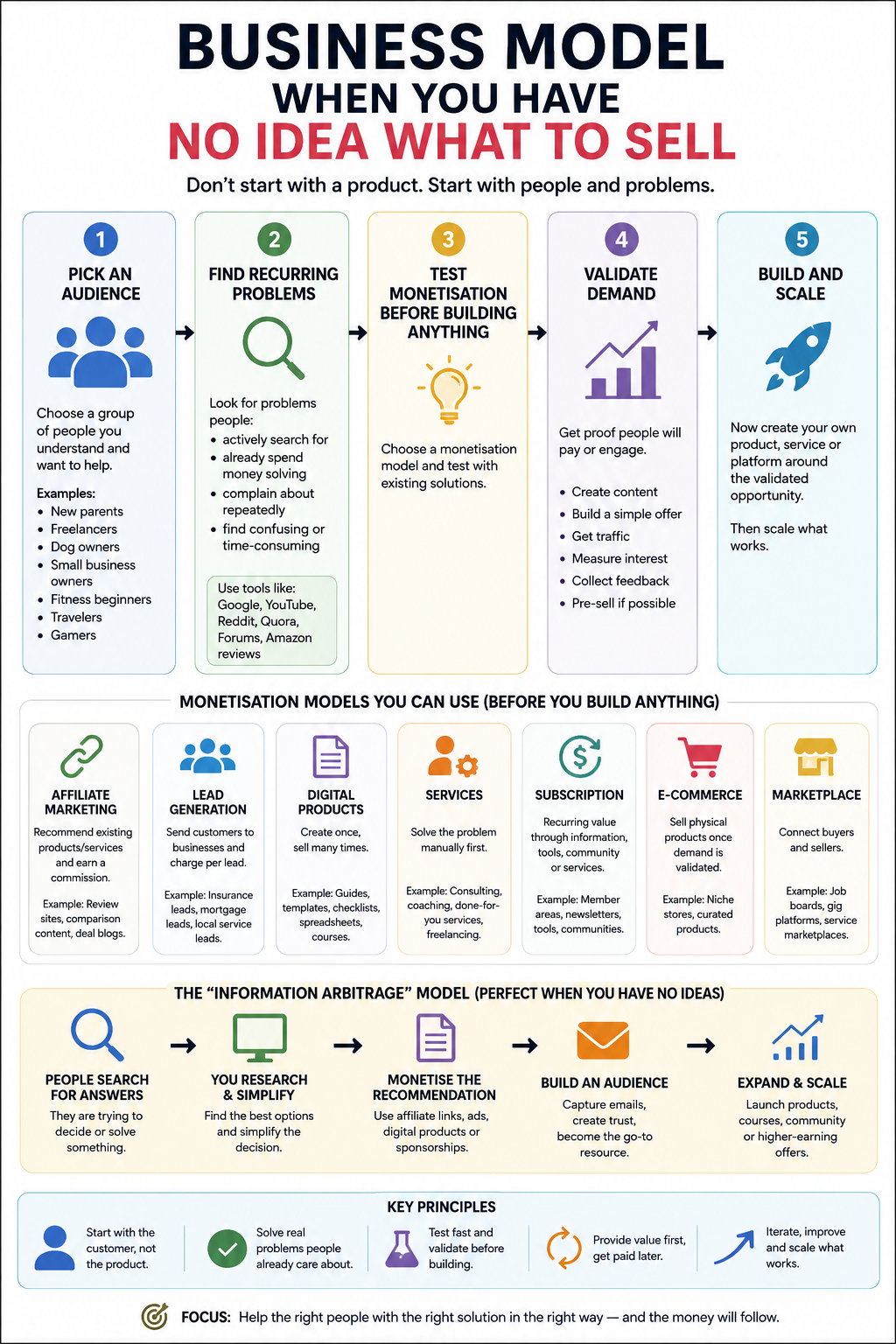
Fall in Love with the Problem, Not Your Solution
When we come up with an idea, we usually fall deeply in love with our own solution. We picture the app, the physical product, or the coaching program running smoothly, making money while we sleep. But true business validation requires you to shift your focus entirely away from your idea and onto the actual problem your target audience is facing.
Ask yourself: Is this problem painful enough that people are already actively trying to solve it? If people are currently living with a minor annoyance and suffering no negative consequences from it, they will not pay you to fix it. On the other hand, if they are spending their own time, frustration, or money trying to find a workaround, you have found a real pain point.
Before you build anything, write down three specific assumptions you are making about your future customers. For example: ‘Busy working parents need healthy meals delivered in under 15 minutes,’ or ‘Freelance graphic designers struggle to find reliable tax software.’ Once you have your assumptions written down, your only job is to go out into the digital world and prove whether they are true or false.

Conduct Free Market Research Where Your Audience Hangs Out
You don’t need expensive focus groups or market research firms to find out what people want. The internet is already full of free, public forums where your future customers are complaining about their daily frustrations. Places like Reddit, specialized Facebook groups, Quora, and Twitter are goldmines for validating ideas without spending a dime.
Search for keywords related to your niche and read what people are struggling with. Look for threads where users ask, ‘Does anyone know a tool that does X?’ or ‘I am so sick of trying to figure out Y.’ Take note of the exact words they use. When you eventually talk about your offer, using your audience’s exact vocabulary builds instant trust because they feel deeply understood.
You can also use free keyword research tools like Google Keyword Planner or AnswerThePublic to see how many people are typing questions related to your idea into search engines every month. If search volume is zero, it might mean the market is too niche or doesn’t exist yet. If search volume is high, you have proof that people are actively looking for answers.
Use the ‘Fake Door’ Method to Measure Real Interest
One of the most effective ways to test an idea for free is called the ‘fake door’ or ‘painted door’ method. This involves presenting your product or service as if it already exists to see if people try to buy it. Don’t worry—this isn’t about scamming people; it is about measuring genuine intent rather than polite encouragement.
For instance, you can put together a simple one-page landing page using free tools like Carrd, Google Sites, or Mailchimp. Describe your upcoming service or product clearly, outlining its benefits and features. At the bottom, add a call-to-action button that says ‘Get Started’ or ‘Pre-Order Now.’
When a visitor clicks that button, a simple pop-up window can appear stating: ‘We are currently putting the finishing touches on this product and launching on [Date]. Enter your email to get notified the second we go live and receive an early-bird discount!’ If people click that button and leave their email address, you have just gathered concrete proof of interest.
Talk Directly to Potential Customers Without Selling
Nothing beats a direct conversation. Reach out to 5 to 10 people who fit your ideal customer profile on LinkedIn, Instagram, or through community forums. Frame your message humbly: ‘Hey Sarah, I am researching the challenges busy parents face when planning weeknight dinners. I am not selling anything—I just want ask three quick questions about your routine.’
Most people are surprisingly willing to help if they feel you genuinely want to learn rather than pitch them something. During your chat, ask open-ended questions like: ‘What is the hardest part about X?’ and ‘What have you tried so far to fix it?’ Listen closely to where they sigh, hesitate, or show genuine emotion. Their answers will tell you instantly whether your business idea is a goldmine or a dead end.
If five people in a row tell you they don’t really care about the problem you are trying to solve, congratulations! You just saved yourself months of hard work and thousands of dollars. Pivot your idea, talk to a different group of people, and test again.
This is where having a structured roadmap makes all the difference. If you are wondering how to pull all these pieces together—from finding your niche to building a simple landing page and driving your first visitors—having a step-by-step framework is essential. For a comprehensive, beginner-friendly guide that walks you through building an online business from scratch, check out the training and community over at Wealthy Affiliate, which offers fantastic practical lessons for total beginners.
This post contains an affiliate link. If you sign up through it, I may earn a commission at no extra cost to you.
Build a Minimal Viable Audience (MVA) Before a Product
Instead of building a Minimal Viable Product (MVP), modern smart entrepreneurs build a Minimal Viable Audience (MVA). An MVA is a small group of people who know, like, and trust you because you are sharing helpful information about your topic for free.
Start a free blog, post helpful tips on LinkedIn, record short videos on TikTok, or start a weekly email newsletter. Share your journey, document what you are learning, and solve small problems for people for free. By the time you actually launch a paid offer, you won’t have to guess if anyone will buy—you can simply ask the audience you’ve already built.

Embrace Failure as Fast Feedback
The beauty of testing a business idea with zero money is that you have zero financial risk. If your landing page gets zero sign-ups, or if nobody responds to your outreach messages, you haven’t lost a dime. You have simply gathered data.
Entrepreneurship is an experiment. Treat every failed test not as a personal defeat, but as a scientific data point pointing you closer to what actually works. Adjust your angle, tweak your target audience, or try a different problem statement, and run your next test. Once you find an idea that generates genuine excitement and early sign-ups, you’ll know—with confidence—that it is finally time to start building.