

validate business idea | Financial Freedom Forever

How to Validate Your Online Business Idea for Free Before Building Anything

How to Validate Your Online Business Idea for Free Before Building Anything

Starting a new online business is genuinely exciting, but one of the biggest mistakes beginners make is spending weeks or even months building a website, designing a logo, and stocking products before knowing if anyone actually wants to buy what they are selling. Learning how to validate a business idea for free before spending a single dollar of your hard-earned money is the smartest move you can possibly make. Validation simply means testing your concept with real people to prove there is actual demand for your solution. Instead of guessing what your future customers might like, you can use the power of free social media feedback to let them tell you directly. This approach saves you time, prevents frustration, and ensures that you build something people are genuinely eager to pay for.

Why Traditional Business Planning is Overwhelming for Beginners

If you have ever looked at a traditional business plan template, you probably felt an immediate wave of stress. Terms like "market capitalization," "SWOT analysis," and "projected cash flow statements" are enough to make any absolute beginner want to close their laptop and give up. The good news is that modern online entrepreneurship does not require a fancy business school degree or a thick binder full of financial forecasts. You do not need to take out a loan, hire a consultant, or spend weeks writing a document that nobody outside of your computer screen will ever read.

Instead, the modern approach to business is agile, lean, and rooted in direct conversation. Your potential customers are already hanging out online every single day, scrolling through feeds, asking questions in forums, and complaining about problems that your future business could easily solve. By skipping the formal paperwork and going straight to where your audience spends their time, you can gather honest feedback in a matter of days. This grassroots style of research is not only free, but it also gives you infinitely better data than a textbook ever could, because it comes straight from the mouths of real humans who have real problems.

A friendly workspace scene with a laptop showing a social media feed, a notebook with rough sketches, and a cup of coffee on a clean wooden desk

The Power of Free Social Media Feedback

Social media is often viewed as a distraction or a place to look at vacation photos, but for a smart beginner, it is the world's greatest market research laboratory. Platforms like Facebook, Reddit, TikTok, Instagram, and X (formerly Twitter) are packed with thriving communities built around specific hobbies, challenges, and interests. Whether your passion is organic gardening, freelance writing, budget travel, or learning how to code, there are thousands of people actively discussing it online right now.

Using social media feedback correctly does not mean spamming your product link into every group you can find—that is a fast track to getting banned. Instead, it means listening carefully to what people are struggling with, asking thoughtful questions, and observing which topics generate the most emotional responses. When you see dozens of people commenting on a specific frustration, saying things like "I wish there was an easier way to do this," you have just struck gold. You have found a real pain point that people are actively looking to fix, which forms the rock-solid foundation of any successful online venture.

Step-by-Step Guide to Testing Your Concept Without Spending Money

So, how do you actually execute this process in the real world without spending a dime? It comes down to a simple, repeatable three-step framework that any beginner can follow, regardless of technical skill or prior experience.

First, pick a specific niche and identify three online hangouts where those people congregate. This could be a specialized subreddit, a Facebook group for local moms, or a niche hashtag feed on Instagram. Spend a few days just reading through posts to understand the language your audience uses, the questions they ask over and over, and the things that annoy them the most.

Second, draft a simple post or short-form video that addresses one of those major pain points. Instead of saying, "Hey, I am launching a new product!" frame it as a question or an invitation for advice. For example: "Hey everyone, I am putting together a simple guide to help beginner freelancers handle their taxes without losing their minds. What is the single most confusing part of tax season for you right now?" This approach invites genuine conversation rather than triggering sales resistance.

Third, pay close attention to the responses. Do people reply with detailed stories about their struggles? Do they ask you to let them know when your guide is ready? That positive engagement is your validation. If you get crickets, it means either the audience does not care about that specific problem, or your phrasing needs tweaking. Either way, you learned this crucial lesson in five minutes for free, rather than spending six months writing a guide nobody wanted.

This post contains an affiliate link. If you sign up through it, I may earn a commission at no extra cost to you.

Where to Go From Here: Turning Feedback Into a Real Strategy

By now, you understand the core philosophy of testing your concepts early and using real audience feedback to steer your ship. But once you have gathered all this great feedback and confirmed that your idea has legs, a very normal question pops up for beginners: "Okay, this is working, but where do I actually go to build out a real website, attract consistent traffic, and turn this into a sustainable business step by step?"

When you reach that stage and need a clear, structured roadmap that takes you from raw idea to a fully functioning online brand without overwhelming technical jargon, the training and community at Wealthy Affiliate provide an incredible, beginner-friendly environment. It walks you through setting up your digital home, creating helpful content, and understanding how online businesses actually generate revenue, all while letting you start for free so you can test the waters before committing to anything.

A beginner entrepreneur smiling while looking at a laptop screen in a bright, cozy home office environment, representing success and clarity

Common Pitfalls to Avoid During the Validation Process

Even with a free and straightforward strategy, beginners often fall into a few common traps that skew their results and lead them down the wrong path. Being aware of these pitfalls ahead of time will save you a lot of wasted energy and keep your validation efforts honest and accurate.

The most dangerous trap is asking your friends and family for feedback on your business idea. While your mom and your best friend love you and want to support you, their opinions are almost entirely useless for market research. Out of kindness, they will almost always tell you your idea is amazing, even if it makes zero sense. They are not objective paying customers; they are cheerleaders. Stick to gathering feedback from strangers online who have no personal loyalty to you, because strangers will give you the unvarnished truth.

Another major mistake is falling in love with your own solution before you understand the customer's problem. It is very easy to get attached to a specific product format, a brand name, or a logo you designed in Canva. If the validation data tells you that people do not care about your solution, you must be willing to pivot. Validation is not about proving that your original idea is right; it is about discovering what people actually need so you can give it to them successfully.

Your Next Steps to Launching With Confidence

Mastering how to validate a business idea for free completely changes your perspective on entrepreneurship. It shifts your mindset from high-stress gambling to exciting, low-risk experimentation. You no longer have to cross your fingers, drain your savings account, and pray that your launch succeeds. Instead, you can let your future audience guide your steps every single day.

Take ten minutes today to write down a broad topic or passion you enjoy. Then, find one online community where people talk about that topic. Read through their conversations, spot a common frustration, and ask a simple question. You are officially on your way to building a smart, sustainable online business from the ground up, with zero financial risk and maximum confidence.

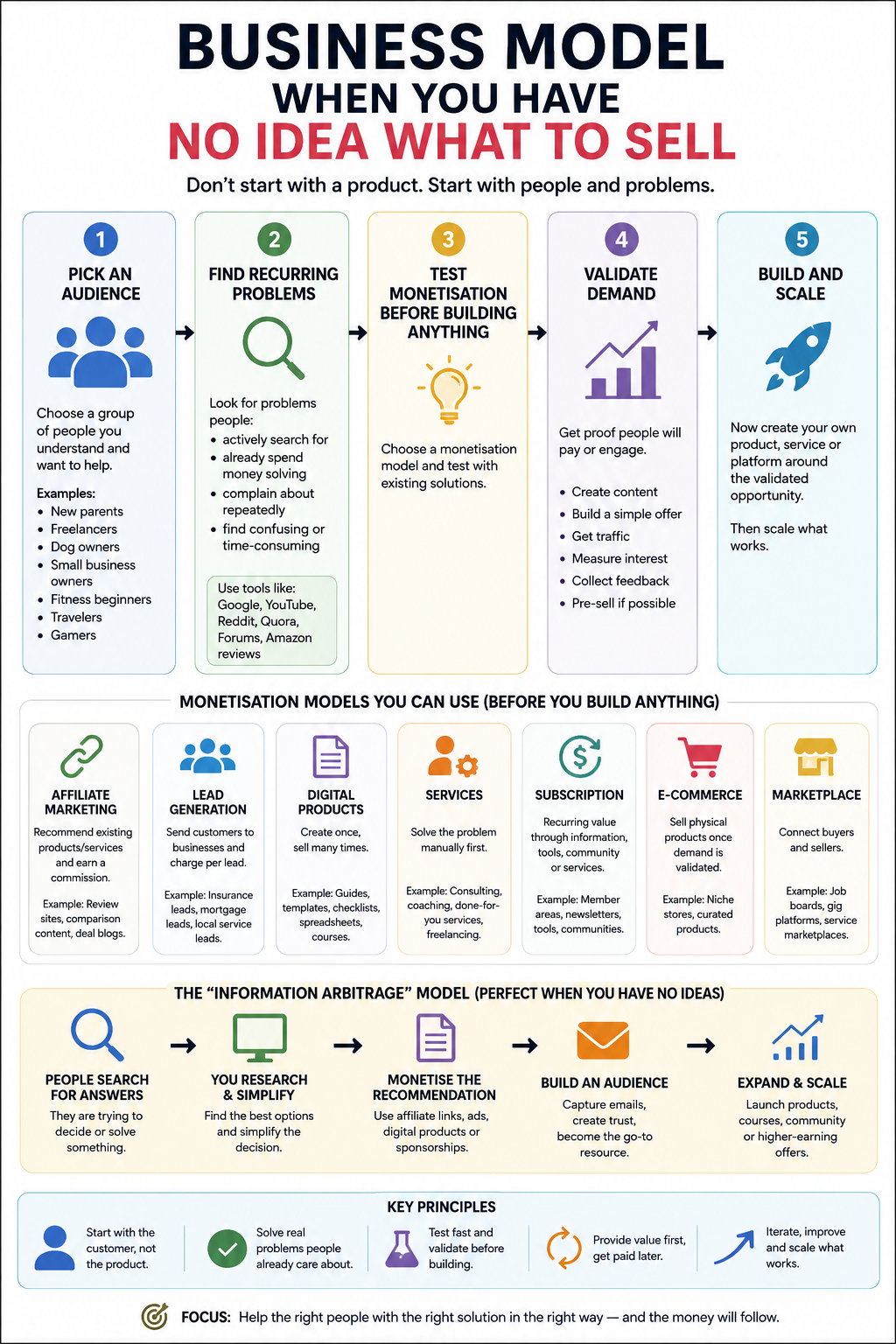
How to Test a Business Idea With No Money (A Beginner’s Guide)

How to Test a Business Idea With No Money (A Beginner’s Guide)

Have you ever had a brilliant business idea pop into your head while washing the dishes or trying to fall asleep, only to wonder if it’s actually worth pursuing? You are definitely not alone. Figuring out how to test a business idea with no money is the single most important skill a new entrepreneur can learn before spending a single dollar on logos, inventory, or website hosting.

Most beginners make the expensive mistake of building a product or service first and hoping people will buy it. In the real world, 90% of startups fail because they build something nobody actually wants. The good news? You can completely avoid this trap. Validation allows you to test market demand using zero financial capital, relying purely on your time, curiosity, and a few smart strategies.

How to Test a Business Idea With No Money (A Beginner's Guide)

Fall in Love with the Problem, Not Your Solution

When we come up with an idea, we usually fall deeply in love with our own solution. We picture the app, the physical product, or the coaching program running smoothly, making money while we sleep. But true business validation requires you to shift your focus entirely away from your idea and onto the actual problem your target audience is facing.

Ask yourself: Is this problem painful enough that people are already actively trying to solve it? If people are currently living with a minor annoyance and suffering no negative consequences from it, they will not pay you to fix it. On the other hand, if they are spending their own time, frustration, or money trying to find a workaround, you have found a real pain point.

Before you build anything, write down three specific assumptions you are making about your future customers. For example: ‘Busy working parents need healthy meals delivered in under 15 minutes,’ or ‘Freelance graphic designers struggle to find reliable tax software.’ Once you have your assumptions written down, your only job is to go out into the digital world and prove whether they are true or false.

A clean, minimalist desk with a notebook showing sticky notes of ideas and a laptop, bright natural lighting, cozy and productive atmosphere

Conduct Free Market Research Where Your Audience Hangs Out

You don’t need expensive focus groups or market research firms to find out what people want. The internet is already full of free, public forums where your future customers are complaining about their daily frustrations. Places like Reddit, specialized Facebook groups, Quora, and Twitter are goldmines for validating ideas without spending a dime.

Search for keywords related to your niche and read what people are struggling with. Look for threads where users ask, ‘Does anyone know a tool that does X?’ or ‘I am so sick of trying to figure out Y.’ Take note of the exact words they use. When you eventually talk about your offer, using your audience’s exact vocabulary builds instant trust because they feel deeply understood.

You can also use free keyword research tools like Google Keyword Planner or AnswerThePublic to see how many people are typing questions related to your idea into search engines every month. If search volume is zero, it might mean the market is too niche or doesn’t exist yet. If search volume is high, you have proof that people are actively looking for answers.

Use the ‘Fake Door’ Method to Measure Real Interest

One of the most effective ways to test an idea for free is called the ‘fake door’ or ‘painted door’ method. This involves presenting your product or service as if it already exists to see if people try to buy it. Don’t worry—this isn’t about scamming people; it is about measuring genuine intent rather than polite encouragement.

For instance, you can put together a simple one-page landing page using free tools like Carrd, Google Sites, or Mailchimp. Describe your upcoming service or product clearly, outlining its benefits and features. At the bottom, add a call-to-action button that says ‘Get Started’ or ‘Pre-Order Now.’

When a visitor clicks that button, a simple pop-up window can appear stating: ‘We are currently putting the finishing touches on this product and launching on [Date]. Enter your email to get notified the second we go live and receive an early-bird discount!’ If people click that button and leave their email address, you have just gathered concrete proof of interest.

Talk Directly to Potential Customers Without Selling

Nothing beats a direct conversation. Reach out to 5 to 10 people who fit your ideal customer profile on LinkedIn, Instagram, or through community forums. Frame your message humbly: ‘Hey Sarah, I am researching the challenges busy parents face when planning weeknight dinners. I am not selling anything—I just want ask three quick questions about your routine.’

Most people are surprisingly willing to help if they feel you genuinely want to learn rather than pitch them something. During your chat, ask open-ended questions like: ‘What is the hardest part about X?’ and ‘What have you tried so far to fix it?’ Listen closely to where they sigh, hesitate, or show genuine emotion. Their answers will tell you instantly whether your business idea is a goldmine or a dead end.

If five people in a row tell you they don’t really care about the problem you are trying to solve, congratulations! You just saved yourself months of hard work and thousands of dollars. Pivot your idea, talk to a different group of people, and test again.

This is where having a structured roadmap makes all the difference. If you are wondering how to pull all these pieces together—from finding your niche to building a simple landing page and driving your first visitors—having a step-by-step framework is essential. For a comprehensive, beginner-friendly guide that walks you through building an online business from scratch, check out the training and community over at Wealthy Affiliate, which offers fantastic practical lessons for total beginners.

This post contains an affiliate link. If you sign up through it, I may earn a commission at no extra cost to you.

Build a Minimal Viable Audience (MVA) Before a Product

Instead of building a Minimal Viable Product (MVP), modern smart entrepreneurs build a Minimal Viable Audience (MVA). An MVA is a small group of people who know, like, and trust you because you are sharing helpful information about your topic for free.

Start a free blog, post helpful tips on LinkedIn, record short videos on TikTok, or start a weekly email newsletter. Share your journey, document what you are learning, and solve small problems for people for free. By the time you actually launch a paid offer, you won’t have to guess if anyone will buy—you can simply ask the audience you’ve already built.

A smiling person typing on a laptop in a coffee shop, modern and relaxed vibe, representing digital entrepreneurship

Embrace Failure as Fast Feedback

The beauty of testing a business idea with zero money is that you have zero financial risk. If your landing page gets zero sign-ups, or if nobody responds to your outreach messages, you haven’t lost a dime. You have simply gathered data.

Entrepreneurship is an experiment. Treat every failed test not as a personal defeat, but as a scientific data point pointing you closer to what actually works. Adjust your angle, tweak your target audience, or try a different problem statement, and run your next test. Once you find an idea that generates genuine excitement and early sign-ups, you’ll know—with confidence—that it is finally time to start building.

Skip to content